



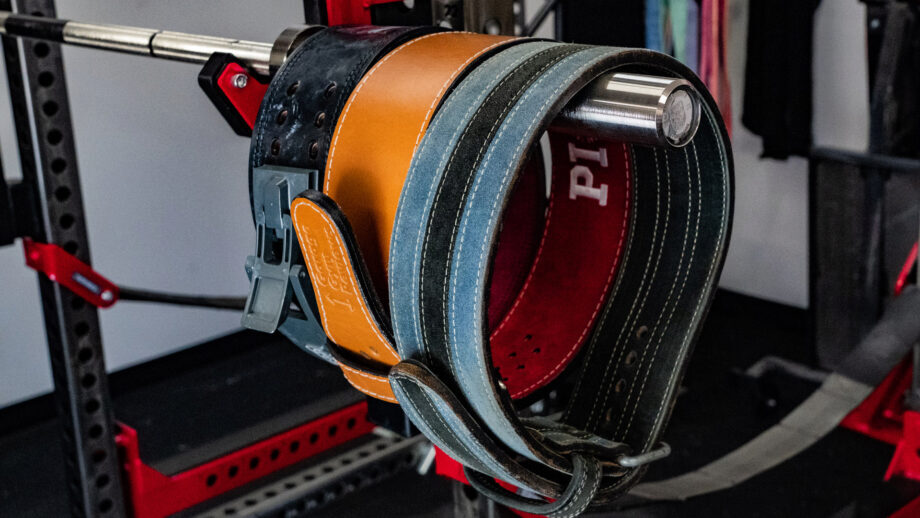
Weightlifting belts are some of the most debated pieces of support gear for working out. Undoubtedly, when used in the right conditions, a weightlifting belt can be a beneficial piece of equipment for your training. According to a systematic review from 20191 a weightlifting belt, by adding intra-abdominal pressure and lumbar support, can increase your stability while lifting, inevitably helping you lift heavier weight.
After many years of training with and without a belt, I put together a guide to the best weightlifting belts, plus everything you should know about how and when to use a lifting belt. To do so, I used our multi-point fitness equipment testing methodology, which scores belts on a 1-5 rating scale in key categories. I and others on the GGR team analyzed factors such as:
- Durability: A 3 out of 5 in durability means the belt shows moderate signs of wear and tear, such as loosening Velcro on a nylon model or early surface cracking on leather. These issues don’t make the belt unusable, but they do suggest it may not stand up to long-term, high-volume training as well as higher-rated options.
- Versatility: A versatility score of 3 stars indicates some limitations across training styles. The belt may feel overly stiff for faster-paced workouts or, on the flip side, lack the firmness needed for maximal lifts, making it better suited to a narrower range of movements rather than all-around use.
- Value: To earn 3 points here, the belt is reasonably priced for what it offers, but may fall short in areas like durability or versatility when compared to competitors. In other cases, the belt may be well-made but slightly overpriced relative to similar options on the market.
- Design and Colors: Style is pretty important in the gym. Here, we rate belts based on the sizing options and how many colors, patterns, and designs were available. Earning a 3 out of 5 usually means the belt comes in a small selection of colors or styles, though the overall look is still appealing.
Additionally, we consulted experts, including Mike Masi, DPT and our very own Caine Wilkes, OLY, USAW-L1, CNC, to discuss the pros and cons of using belts for weightlifting, Strongman training, bodybuilding, cross-training, and beyond. We’ve tested over a dozen weightlifting belts, and many of us use them daily in our training sessions. Plus, we’ve helped more than 1,600 people make strength accessory purchases in 2025, so we’re confident in our recommendations.
Best Weightlifting Belts
- Best Overall Lifting Belt – REP USA Premium Leather Lifting Belt
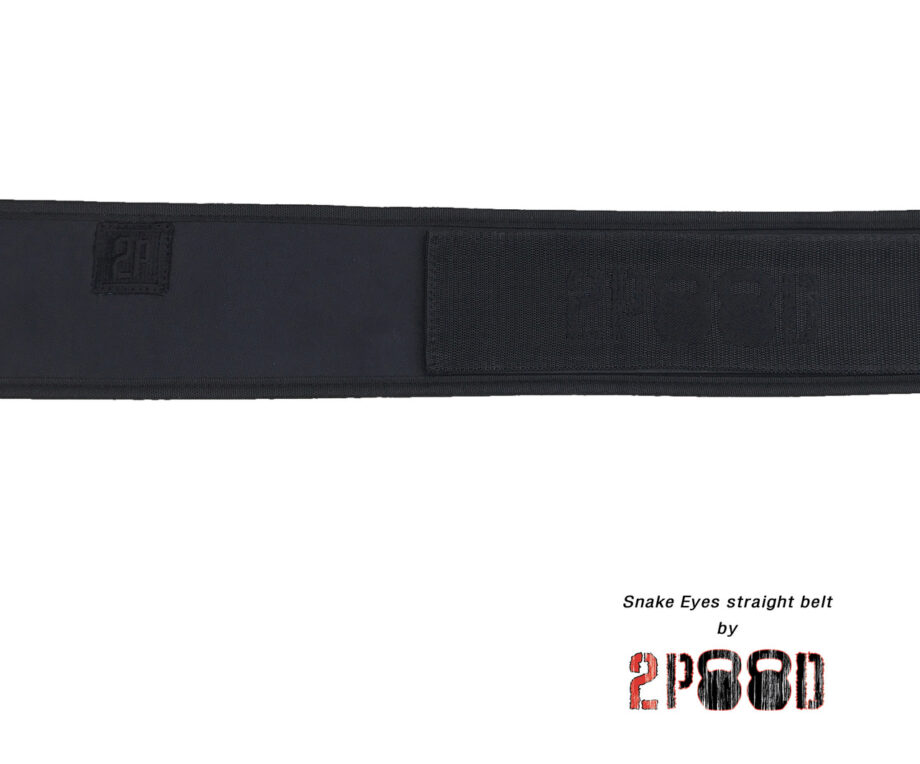
- Best Weightlifting Belt for CrossFit – 2POOD Straight Belt
- Best Lever Belt – Bells of Steel Lever Belt
- Best Budget Weightlifting Belt – Gymreapers Quick-Locking Belt
- Best Leather Weightlifting Belt – Rogue Faded 4″ Lifting Belt by Pioneer
- Best Olympic Weightlifting Belt – Eleiko Premium Weightlifting Belt
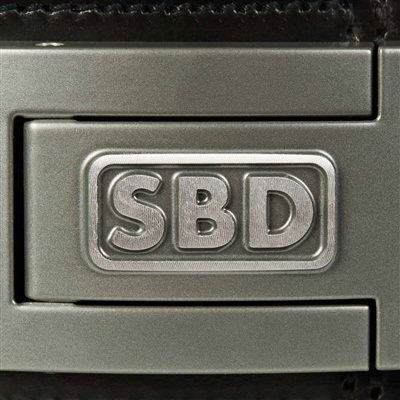
- Best Powerlifting Belt – SBD Belt
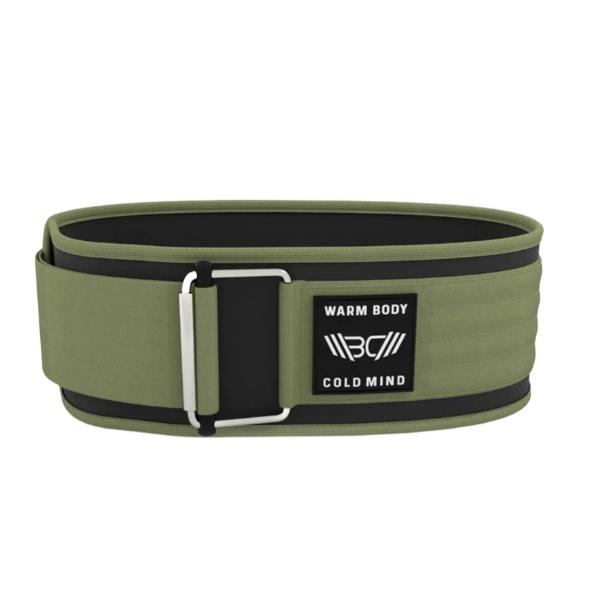
- Best Weightlifting Belt for Beginners – Warm Body Cold Mind 4″ Nylon Weightlifting Belt
Current Top Deals
- REP USA Premium Leather Lifting Belt – Free shipping on all orders
- Bells of Steel Lever Belt – Save 5% using the Home Gym Builder
- Rogue Faded 4″ Lifting Belt by Pioneer – Free shipping on eligible items
Latest Updates
In February 2026, we reviewed our list of the best weightlifting belts and made a few changes based on our latest testing. The REP Fitness USA Premium Leather Weightlifting Belt still earns our top recommendation, but we swapped out picks that didn’t hold up in durability or value. Longstanding inclusions—like the Rogue Fitness Faded 4” Leather Lifting Belt and SBD Leather Lever Weightlifting Belt—continue to stand out for their high scores in these categories.
Best Overall Lifting Belt: REP USA Premium Leather Lifting Belt
Updated by: Amanda Capritto, CPT, CES, CF-L1, CSNC





At a Glance
- Made from long-lasting tanned leather
- 1-inch spacing between buckle adjustments
- Sizes run from S to XXL
- Stiffer design is best suited to powerlifting
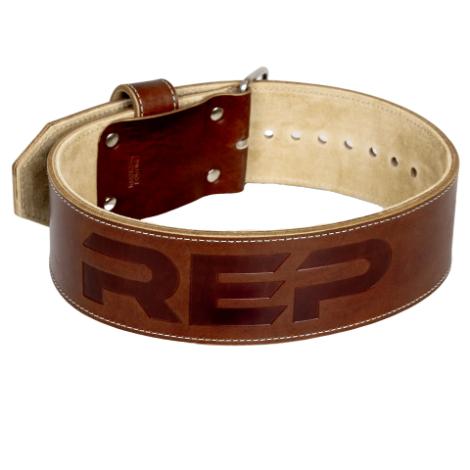
The American-made REP USA Premium Leather Lifting Belt is made with durability and support in mind. At 4 inches wide and 10 millimeters thick, the vegetable-tanned leather can provide major stability in your heavy squats, deadlifts, or other strength movements. Vegetable-tanned leather is known for its strength and durability (and beauty), earning it a 5-out-of-5 score for construction. Its long-term durability solidifies its title as our best overall pick.
Durability: 5/5

Versatility: 3.5/5
Sizing: 5/5

Why We Like the REP USA Premium Leather Lifting Belt
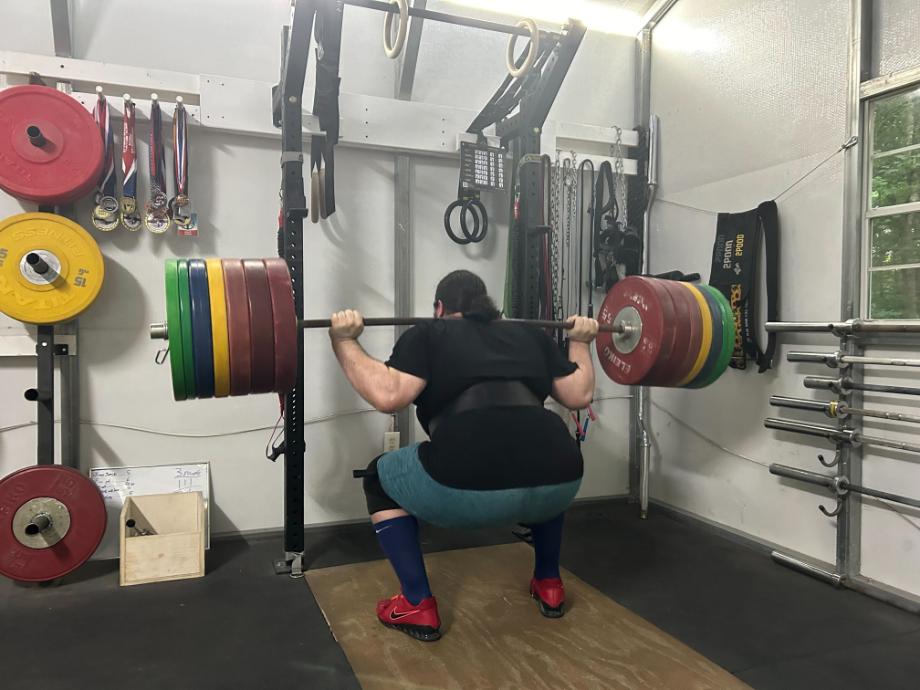
Olympian and GGR Senior Staff Writer Caine Wilkes tried out the REP Premium Leather Belt during a heavy back squat session, pushing a casual 280 kilograms along with deadlifts and even some clean and jerks. He says, “Being an Olympic weightlifter, I usually use thinner belts, so I’m surprised at how much I like this belt, especially for back squats.”
Plenty of sizes are available, too, for superheavyweight-lifting Olympians like Caine and smaller athletes alike; the belts range from size small to 3XL. Keep an eye on the sizing chart REP Fitness provides, though. Caine notes it runs pretty true to size, and rates the sizing a 5 out of 5.
The REP USA Premium Leather Belt is a pricier belt, but Caine says it’s worth it, giving the value a 4 out of 5, as well.
I felt supported through all my heavy squats; I was impressed.
Caine Wilkes, OLY, USAW-L1, CNC
Alternatives
Caine adds that the REP USA Premium Leather Lifting Belt is not the most versatile belt he’s used, scoring it a 3.5 out of 5 for the category. “For Olympic lifts like snatches and cleans, lifters usually want a thinner leather belt tapered at the front so it’s not in the way as much during the lift, unlike this one,” he explains. “I think after breaking the belt in more, it could feel better for those lifts. For now, though, I’ll stick to squats and pulls.”
Also, we wish the holes were a half-inch apart rather than a full inch, but that’s a typical issue with leather belts. Closer buckle holes, such as with half-inch spacing, allow for a more precise fit.
For a more versatile belt for Olympic lifting or functional fitness, check out the 2POOD Straight Belt, which has a more flexible nylon material while still maintaining a solid rigidity for heavy lifts.
Testing Breakdown
The REP USA Premium Leather Lifting Belt earned perfect scores for durability, and sizing, plus near-perfect scores in several other categories.
Vs. The Average
The REP USA belt is pricier than average, but our tester feels that its construction and stability are worth the cost.
| REP USA Premium Leather Lifting Belt | Average Weightlifting Belt | |
| Price | $209.99 | $134 |
| Width | 4” | 4” |
| Thickness | 10 mm | 10 mm |
| Number of Sizes | 6 | 6 |
Best Weightlifting Belt for CrossFit: 2POOD Straight Belt
Updated by: Amanda Capritto, CPT, CES, CF-L1, CSNC



At a Glance
- Excels at high-volume weightlifting
- Also supportive for high-load training
- Countless colors and designs
- Impressive durability
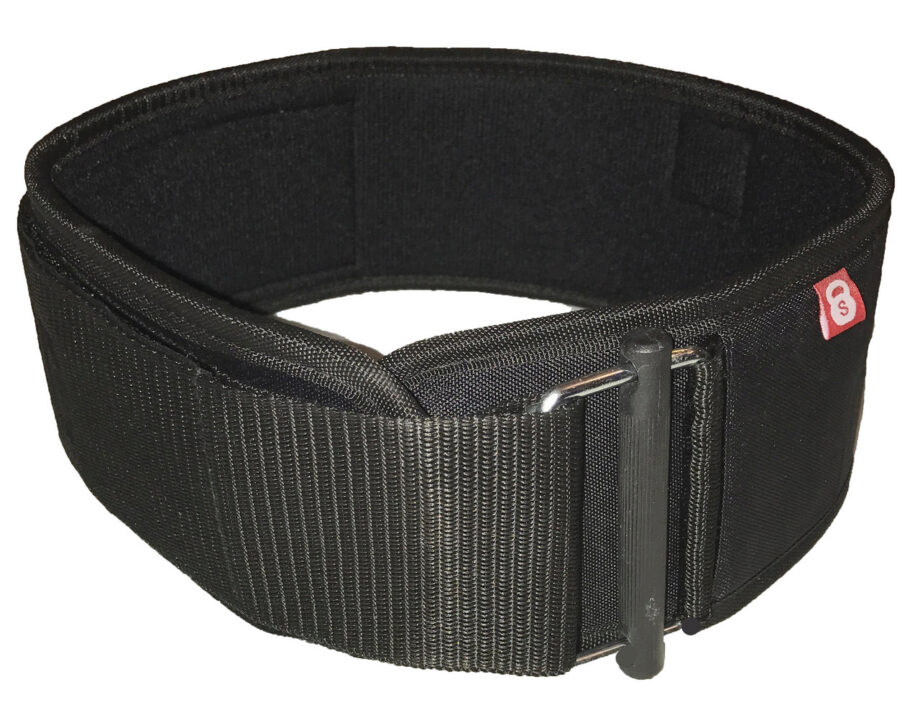
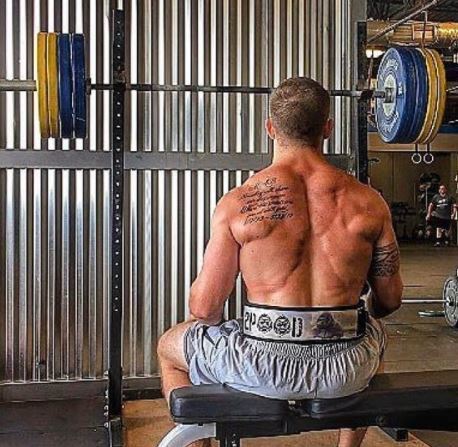
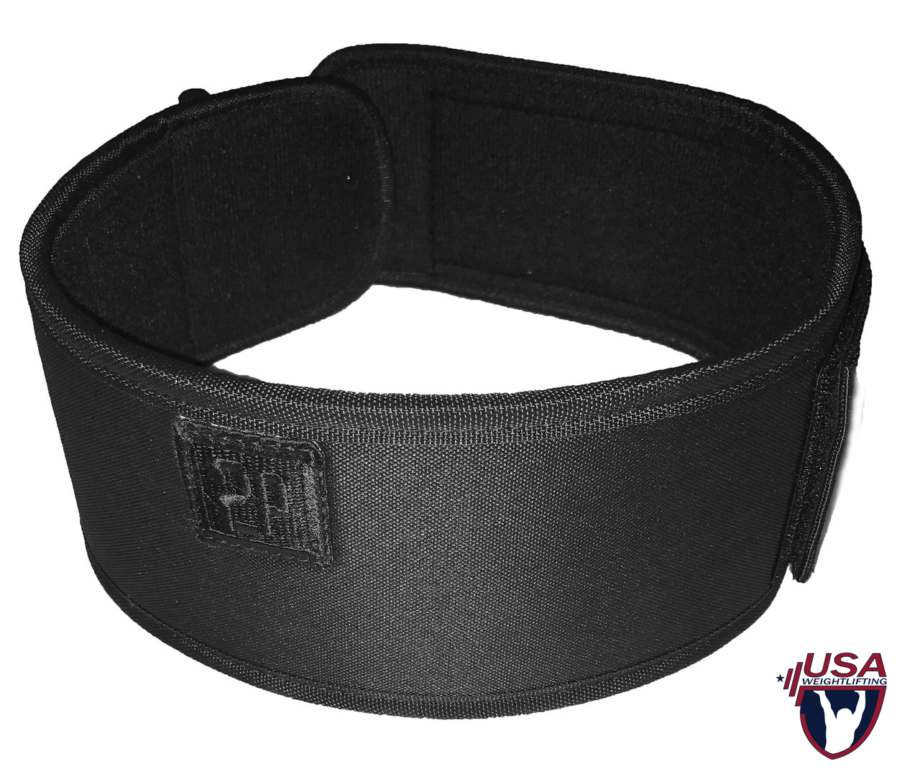
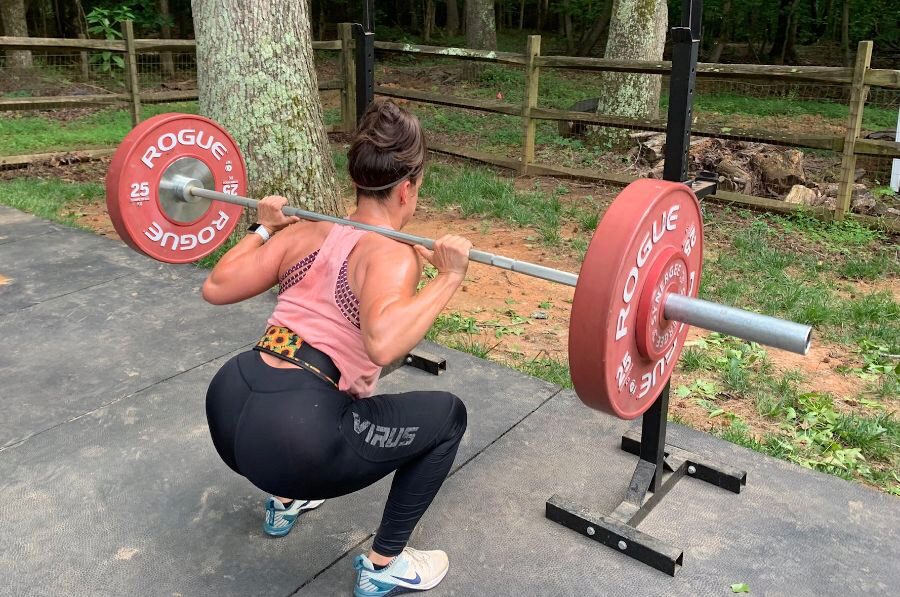
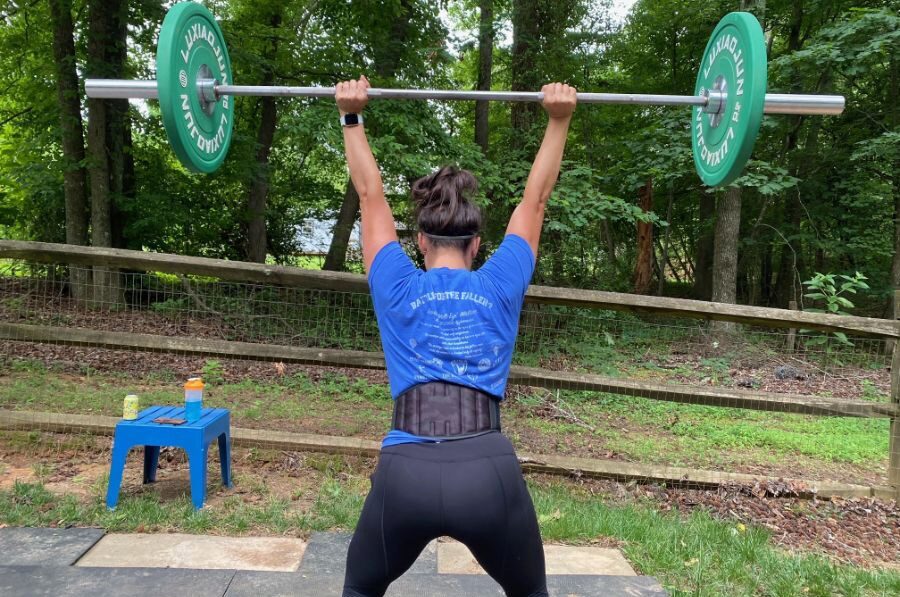
If a 2POOD belt is good enough for Olympic-level weightlifters like Mattie Rogers and CJ Cummings, plus CrossFitters like Sam Briggs and Jacob Heppner, it’s more than good enough for the average exerciser. 2POOD belts are known for their durability in high-intensity, high-volume, high-load settings. Kate Meier, NASM-CPT, USAW-L1, CF-L1, has been using 2POOD belts for over five years now and rates them a 4 out of 5 for versatility.
“These belts are great for almost anything,” she tells me. “They could be more rigid for powerlifting at max efforts, but they can handle just about anything.”
Value: 5/5
Design: 5/5
Versatility: 4/5

Why We Like the 2POOD Straight Belt
Kate rates the belt’s durability a perfect 5-out-of-5 score. 2POOD belts are made of thick, tough nylon with a foam core. In five years, she has only ever had one issue with some noticed fraying along one belt, although she blames it on herself instead of 2POOD’s durability. “I had no issue with my previous 2POOD belt after three years,” Kate explains, “But I let a teammate use my newer belt. He’s bigger than me and probably needed a different size belt, so that may have been the culprit to the fraying.”
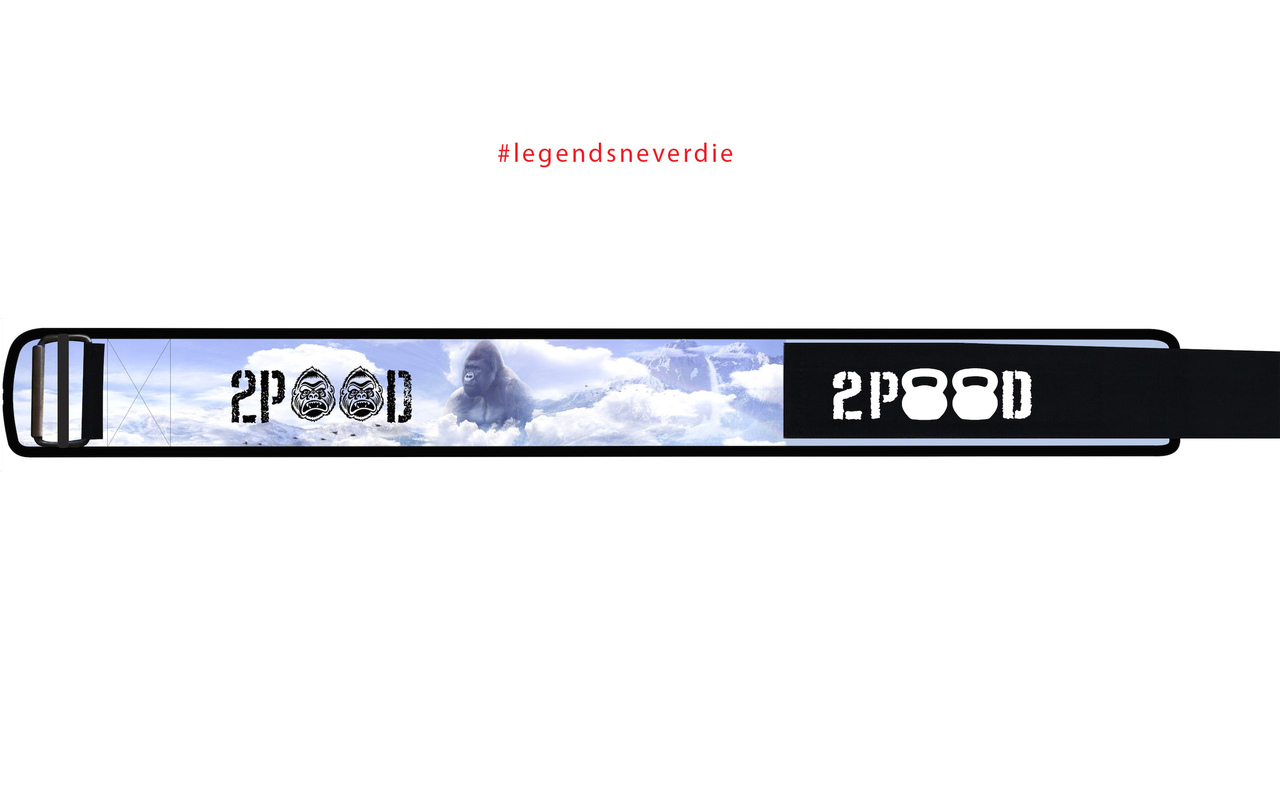
In addition to their durability, 2POOD belts are also known for their whimsical designs. Want donuts on your weightlifting belt? Get a 2POOD belt. Want tacos on it? Get a 2POOD. Leopard print? 2POOD. C-3PO and baby Yoda? 2POOD.
You get the point. If you’re the kind of fitness enthusiast who must have the flyest outfits in the gym, adding a 2POOD weightlifting belt to your gear closet is one surefire way to do so. Accordingly, 2POOD gets a solid 5 out of 5 for its colorway and design options.
All in all, if you’re training for CrossFit, which entails high rep counts and constant adjustment of the belt, then this Velcro-plus-nylon combo is definitely one of your best options.
RELATED: Best CrossFit Equipment
What is great about the Straight Belt for CrossFitters is that it comes on and off quickly. You can tighten it for heavy deadlifts then loosen it for box jumps in just a matter of seconds.
Kate Meier, NASM-CPT, USAW-L1, CF-L1
Alternatives
Be ready for a break-in period; this belt starts off very rigid, earning it a 4 out of 5 for comfort. “It’s going to take some time–weeks, at least–to break in,” Kate says. “After years of wearing various designs of Straight Belts, I now know to fold it, roll it, and really break it in as soon as I get it.”
That said, it’s still not as rigid of a belt as you would want for max-effort powerlifting, Kate clarifies. Compared to a leather prong-buckle belt, a 2POOD belt is not quite as supportive. “If you’re into powerlifting or Strongman, I would still go the leather belt route instead of the nylon 2POOD,” Kate says.
Need a thinner belt? 2POOD Petite Belts are built the same as the brand’s 4-inch Straight Belts, but with a 3-inch width to support shorter torsos.
Testing Breakdown
The 2POOD Straight Belt excels in durability, versatility, and adjustability.
Vs. The Average
About half the price of the average weightlifting belt, the 2POOD Straight Belt holds its own for performance and durability.
| 2POOD Straight Belt | Average Weightlifting Belt | |
| Price | $65 | $134 |
| Width | 4” | 4” |
| Thickness | Not disclosed | 10 mm |
| Number of Sizes | 9 | 6 |
Read our full 2POOD belt review, where Kate details her years-long experience with various styles.
Best Lever Belt: Bells of Steel Lever Belt
Updated by: Amanda Capritto, CPT, CES, CF-L1, CSNC


At a Glance
- Rigid, ultra-supportive design
- Best used for powerlifting
- Can be hard to adjust between lifts
- Minor assembly required
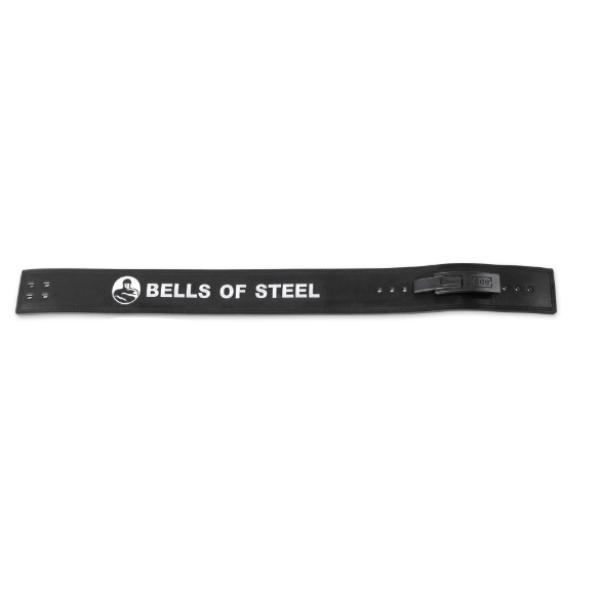
The Bells of Steel Lever Belt easily won the title of “best lever belt” because it’s a heavy-duty leather belt with high-quality stitching. It has a 13-millimeter thickness and 4-inch width for support on those heavy PR attempts. “This is one of the best lever belts I’ve ever seen,” says competitive weightlifter Jacob Penner, CPT, USAW-L2, who has used several types of weightlifting belts during his lifting career. “I give it a 5 out of 5 for durability.”
Comfort: 3.5/5

Durability: 5/5

Value: 5/5

Why We Like the Bells of Steel Lever Belt
The best thing about this belt, perhaps aside from its durability, is that it “reinforces good form,” Jacob says, meaning it helps you brace your core during heavy lifts. For those who don’t know, “bracing” refers to keeping tension in your torso (or core) through breathwork and contracting your ab muscles, almost as if you’re expecting a gut punch. This technique can help with achieving proper lifting technique, and, according to Jacob, is the key to this training belt.
Since it’s really only meant for heavy barbell exercises, we have to rate it at 3.5 out of 5 for versatility, but it’s important to consider the intent here: Though many people may want a belt that can be used for more exercises, Jacob gives it a 5 out of 5 for value. Powerlifters may find this to be a great purchase, especially for the price (below $150, which is relatively low for such a well-built belt).
It’s great to brace against. In fact, it’s uncomfortable if you aren’t bracing. It’s more comfortable when you’re bracing correctly.
Jacob Penner, CPT, USAW-L2
Alternatives
Lever belts are, by nature, more difficult to adjust than Velcro or other types of closures, though you are getting much more support. Jacob says the belt arrives unassembled, and you need a star drive screwdriver bit to adjust it.
“You kind of have to guess where you want to put the fastening mechanism,” he says. “I put the belt around my waist and put it on and had to take it off and go one adjustment tighter. It took maybe 5 minutes total.”
Also, this is meant for ultimate support, so while our comfort rating for the belt is lower at 3.5 out of 5 points, it’s all about expectations and intent; you’re going to have to sacrifice some comfort. “I felt it on my hip bones and my ribs, but after just one or two sets of squats, I felt totally fine,” says Jacob. “Lever belts aren’t really meant to be super comfortable.”
If you need a quicker adjustment from one lift to another, you can check out the Eleiko Premium Weightlifting Belt. The double-prong buckle offers solid support while being very easy to tighten or loosen to your desired fit.
Testing Breakdown
This isn’t the most versatile belt, nor the most comfortable, but it’s one of the best values out there for powerlifters.
Vs. The Average
Despite its robust build and durability, the Bells of Steel Lever Belt is about on par for price with the average weightlifting belt.
| Bells of Steel Lever Belt | Average Weightlifting Belt | |
| Price | $136 | $134 |
| Width | 4” | 4” |
| Thickness | 13 mm | 10 mm |
| Number of Sizes | 5 | 6 |
Best Budget Weightlifting Belt: Gymreapers Quick-Locking Belt
Updated by: Amanda Capritto, CPT, CES, CF-L1, CSNC
At a Glance
- Costs less than $40
- Great for CrossFit and Olympic lifting
- May not be supportive enough for powerlifting
- Nylon construction
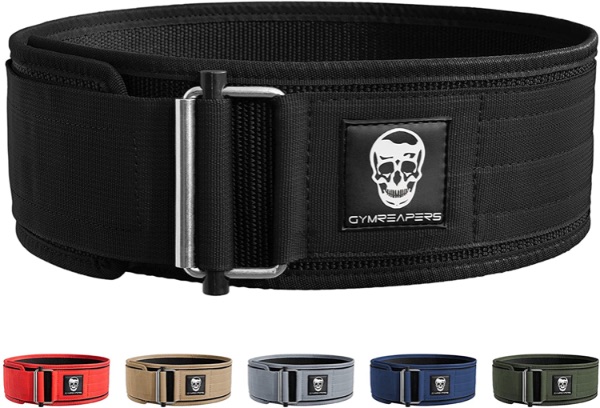
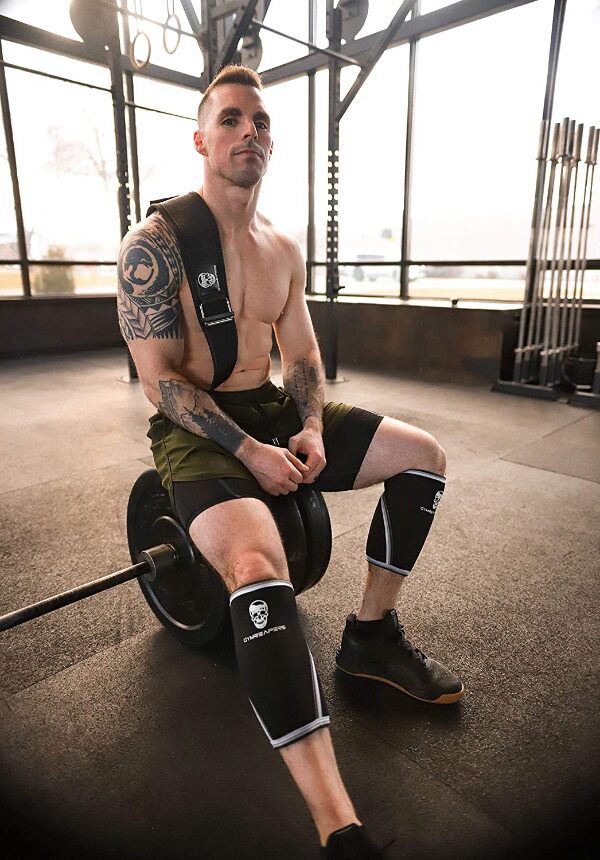
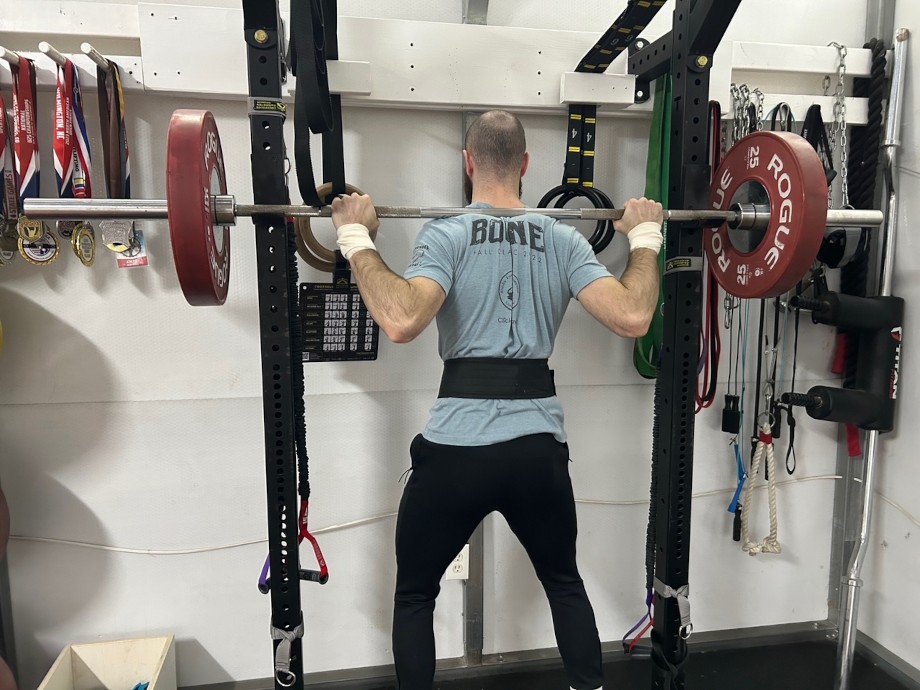
The Gymreapers Quick-Locking Weightlifting Belt is a perfect example of a product that outperforms its price tag (which is roughly $35, in this case). This nylon lifting belt has competition-ready specifications, and it worked for us on heavy lifts and CrossFit exercises alike. The quick-locking belt is easy to use, supportive, and comfortable. Tester Jacob Penner, CPT, USAW-L2, rates it a 4 out of 5 for versatility, noting it works sufficiently well for most types of workouts and training sessions.
Adjustability: 5/5
Comfort: 5/5
Versatility: 4/5

Why We Like the Gymreapers Quick-Locking Belt
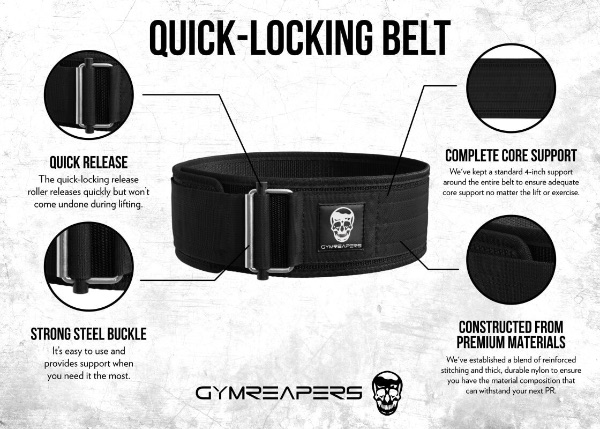
The Gymreapers belt is made of quality nylon that can withstand the tests of time, and the double-stitched seams help ensure it lasts for many years. Jacob has used the belt at his gym for two years now, where it sees routine use from him as well as other members of his gym.
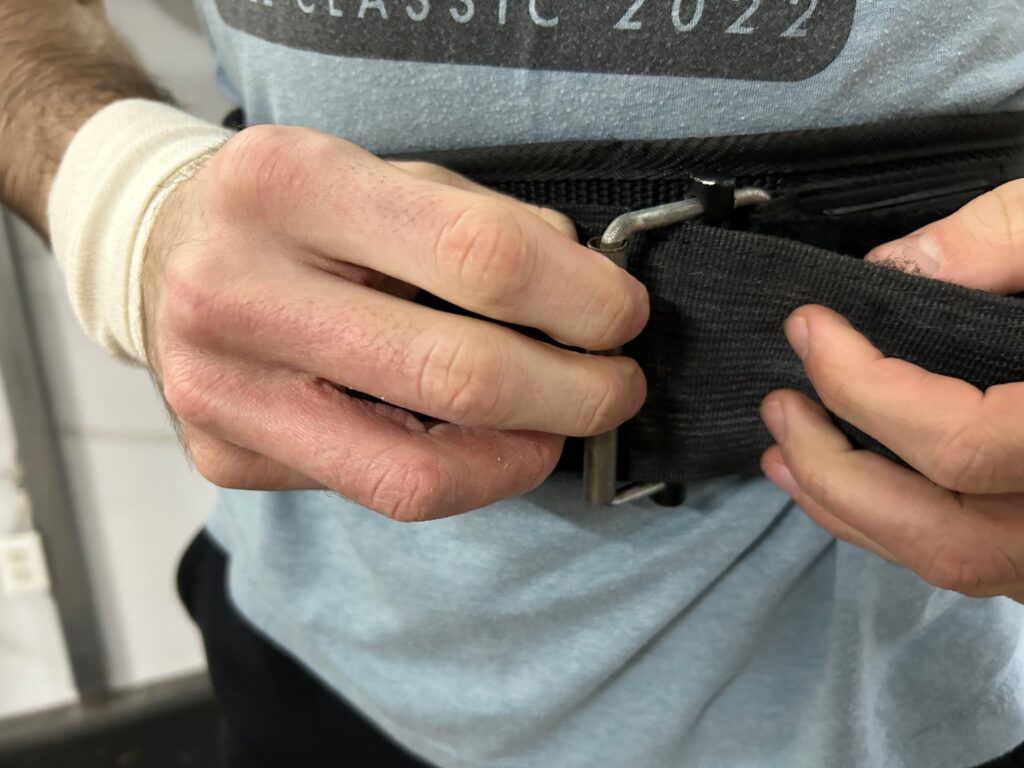
The belt itself has a 4-inch width throughout, and the quick-lock buckle and roller stay secure until the moment you take it off, which is easy to do when needed. Although the Velcro can become frayed (more on that later), the buckle and roller remain secure, which is why the belt can still be used for years. The design allows for micro-adjustments as needed, too, earning it a 5 out of 5 for adjustability.
We’re confident this belt can provide you the stability you need for many years, but if for some reason it does break on you, the company offers a lifetime replacement guarantee. They’ll simply send you a brand-new belt at no additional cost (not even shipping and handling). For this reason, Gymreapers earns a 5 out of 5 for customer experience.
It’s definitely not sturdy enough for power lifts. We’ve used it for Olympic weightlifting, but I think CrossFitters who need quick adjustments for metcons would most benefit from this belt.
Jacob Penner, USAW-L2, CPT
Alternatives
While the nylon on this belt has held up throughout years of use, the Velcro hasn’t, earning it a 3 out of 5 for construction and durability. “It frayed very fast, within about six months,” Jacob explains.
Additionally, while this belt is highly versatile, it’s not the best for competitive powerlifters. It simply doesn’t have the support, Jacob points out.
Gymreapers’ Quick-Locking Belt won’t have the support for heavy squats and deadlifts, but if you need a budget-priced belt for these exercises, try out the Gymreapers Lever Belt. While pricier than this budget belt, it’s one of the cheaper lever belts on the market at $130.
Testing Breakdown
Despite a lower score in construction and durability, the Gymreapers Quick-Locking Belt is one of our higher-scoring belts overall thanks to its versatility, adjustability, comfort, and value.
Vs. The Average
This belt is nearly a full $100 cheaper than the average weightlifting belt, yet performs well in most scenarios.
| Gymreapers Quick-Locking Belt | Average Weightlifting Belt | |
| Price | $35 | $134 |
| Width | 4” | 4” |
| Thickness | 6.35 mm | 10 mm |
| Number of Sizes | 7 | 6 |
Our Gymreapers Quick-Locking Weightlifting Belt review has more details and tester insights.
Best Leather Weightlifting Belt: Rogue Faded 4″ Lifting Belt by Pioneer
Updated by: Amanda Capritto, CPT, CES, CF-L1, CSNC
At a Glance
- Made in the U.S.
- Highest-quality leather craftsmanship
- Black suede liner
- Runs larger than most belts
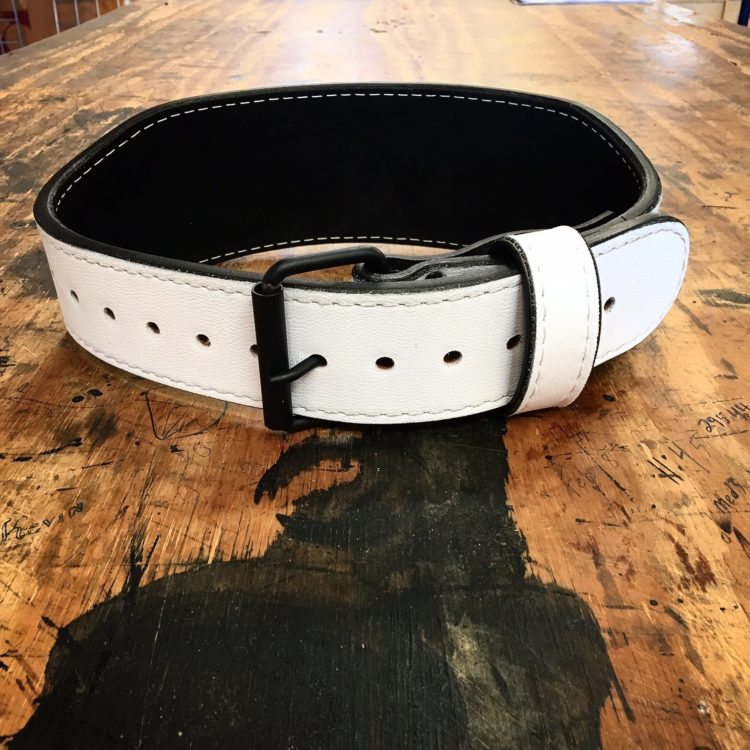
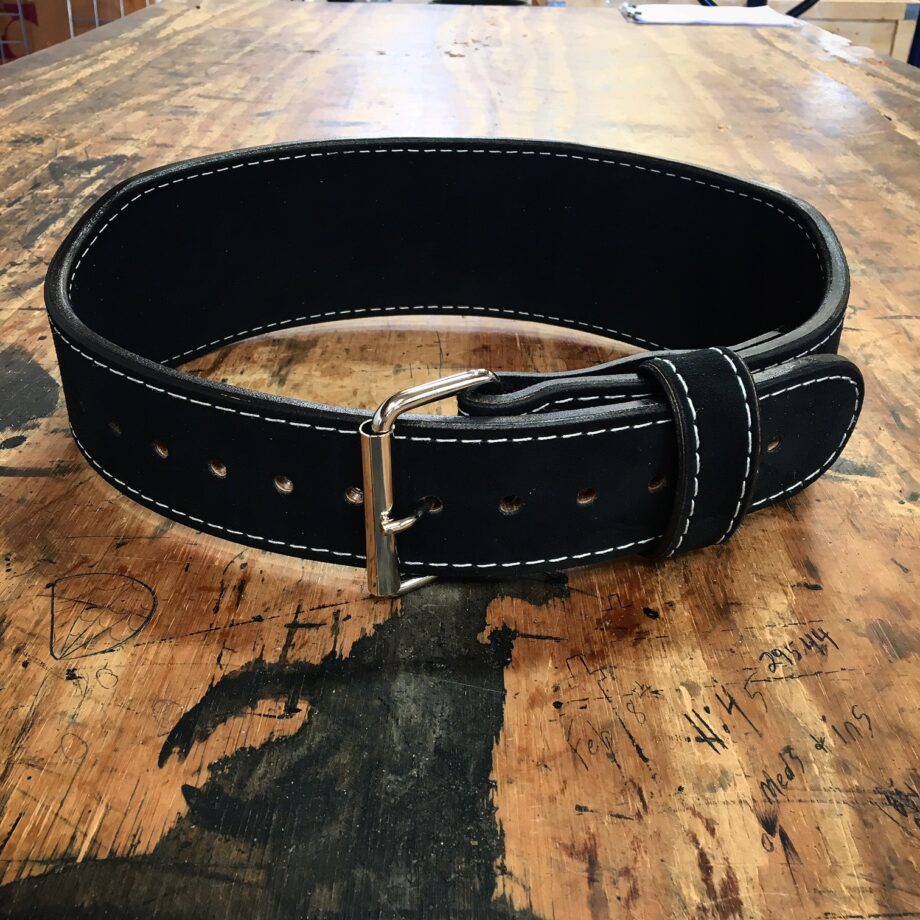
The Rogue 4-inch Faded Lifting Belt is actually the Pioneer Cut Power Belt by Pioneer Fitness (a division of General Leathercraft Manufacturing, a top US-based leather producer). Rogue enlisted Pioneer to create this specific belt to sell on the Rogue website with Rogue branding. This belt represents the latest advancement in the prong style of power belts.
As GGR founder Coop Mitchell tells me, “For most people, it’s the best choice for a leather belt, because it provides the best combination of features and quality at a good price.” He rates it a 5 out of 5 for durability, nodding to its excellent construction.
RELATED: How to Save Money on Rogue Fitness Equipment
Durability: 5/5

Adjustability: 4.5/5

Design: 2/5

Why We Like the Rogue Faded 4” Lifting Belt by Pioneer
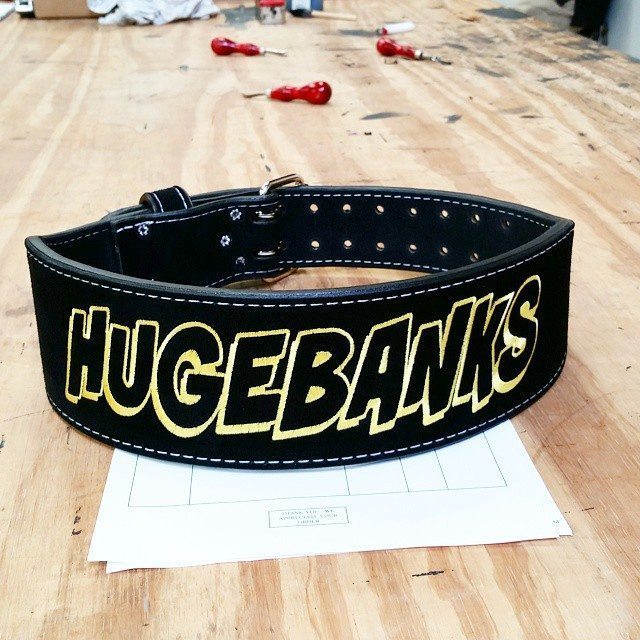
Right out of the gates, Coop was stunned by the sheer quality of this belt. “The materials and craftsmanship are outstanding, and, quite honestly, it impressed me far more than I expected despite being told by many friends just how good they are,” he says. “Everything from the materials used to the customization options is top-notch.”
Pioneer makes some of the best weightlifting belts on the market, but the Pioneer Cut belt stands out. It’s just as good as all of Pioneer’s other belts, but it also has a unique feature that allows for precise adjustments in half-inch increments, earning it a 4.5 out of 5 for adjustability. “Most prong belts adjust only in 1-inch increments, which often feels either too much or too little,” Coop says. Pioneer states that this specific cut is a patent-pending design by powerlifter Steve Strohm.
In comparison to other power belts, the Pioneer Cut belt tapers down the genuine leather very cleanly, which is probably due, in part, to the quality of sole bend leather used. Sole bend leather is some of the highest quality leather you can find, as it’s cut from the best portion of steer hides. Outside of some high-end weightlifting belts, sole bend leather can commonly be found in high-quality shoes and boots.
I have yet to test another weightlifting belt that gave me as good of a first impression as this Rogue belt.
Cooper Mitchell, GGR founder
Alternatives
Because there’s only one colorway, the belt only gets a 2 out of 5 for color and design options. However, the one available design looks sharp. You can tell Pioneer spends extra time sanding down the leather at the edges so that it results in a smooth and consistent appearance. The edges are then dressed and finished black, which gives the belt a professional look.
Also, Coop notes, “Breaking in a thick belt like this does take some time. One way to speed this process up is by rolling it up into a circle one way, massaging it back and forth, and then rolling it up into a circle the other way and repeating.” This is not a one-time process, but eventually, the belt will begin to fit your torso like your favorite baseball glove would fit your hand. That’s the beauty of leather.
For a more budget-friendly leather belt, take a look at the Iron Bull Strength Powerlifting Belt—a double-prong belt that comes in at just $80.
Testing Breakdown
This Rogue Fitness x Pioneer belt earned outstanding scores for everything but color options and design, as there is only one colorway available (but it does look sleek!).
Vs. The Average
Though slightly more expensive than average, we’d happily pay the $30 difference in price for the quality of this weightlifting belt.
| Rogue Faded 4” Lifting Belt by Pioneer | Average Weightlifting Belt | |
| Price | $163 | $134 |
| Width | 4” | 4” |
| Thickness | Not disclosed | 10 mm |
| Number of Sizes | 5 | 6 |
For a more in-depth look at this belt, check out our Rogue Fitness x Pioneer Lifting Belt review.
Best Olympic Weightlifting Belt: Eleiko Premium Weightlifting Belt
Updated by: Amanda Capritto, CPT, CES, CF-L1, CSNC

At a Glance
- Competition-certified specs
- High-quality leather construction
- 1-inch adjustment points
- Tapered design
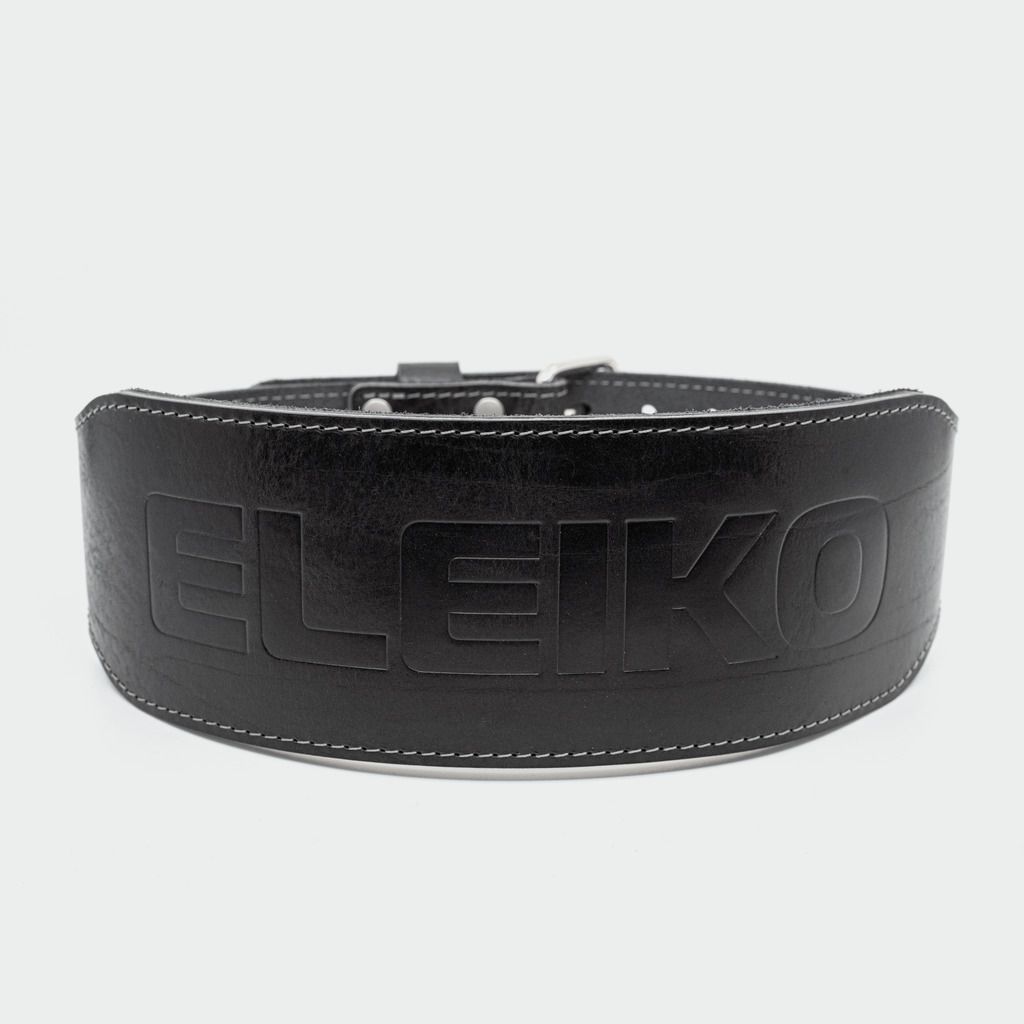
Eleiko makes quality products—there’s no beating around that bush—and the Eleiko Premium Olympic Weightlifting Belt is no exception. Handcrafted from 100% vegetable-tanned leather in Sweden, this belt screams durability and stability, easily earning a 5 out of 5 for its construction.
Jacob Penner, a USAW-2 weightlifting coach and owner of Endless Strength Weightlifting, says this belt has held up extremely well in the two years he’s owned it. “It still looks brand new,” he adds.
RELATED: Best Olympic Barbell
Adjustability: 4/5
Comfort: 4/5
Versatility: 4.5/5
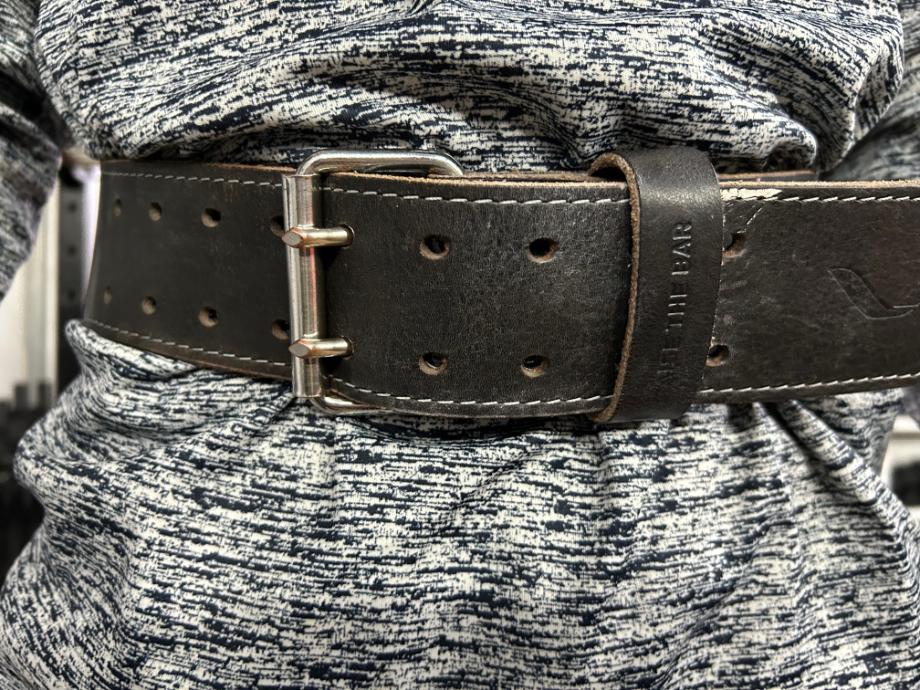
Why We Like the Eleiko Premium Weightlifting Belt
Aside from its durability, Jacob also says it’s a highly versatile belt that can be used for heavy lifting or lighter high-rep workouts, giving it a 4.5 out of 5 for versatility. It works as a deadlift belt and squat belt in addition to an Olympic weightlifting belt.
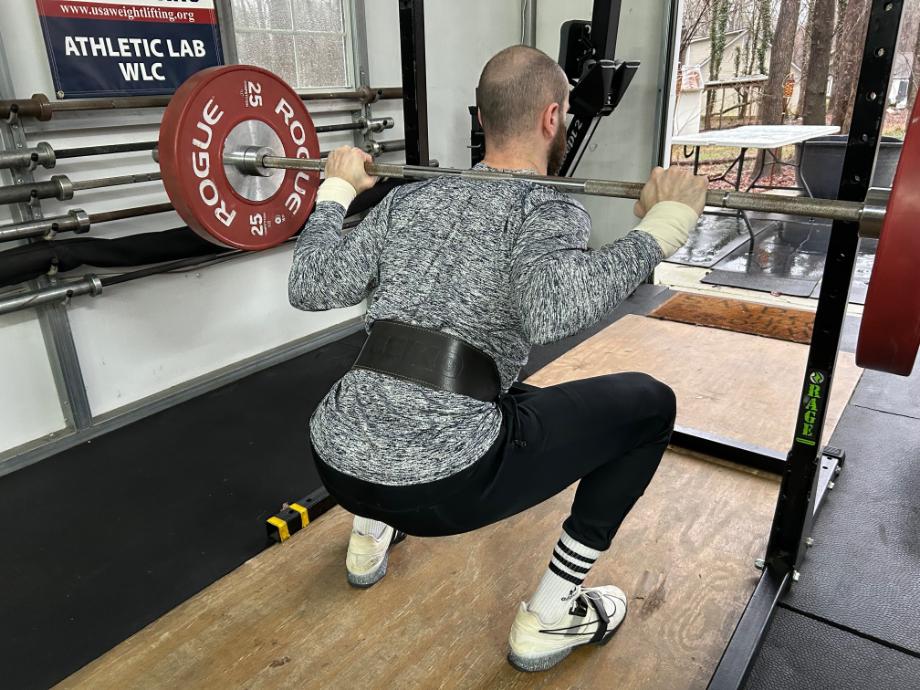
The measurements come in at a 4-inch width, which tapers to 2 inches in the front along with an 8-millimeter thickness. Although it’s pretty rigid (per Cooper Mitchell, GGR founder), the tapered width allows for more mobility in deep squats, making it a great option for Olympic weightlifters.
“This belt struck me as more rigid than most leather belts,” Coop says. “There isn’t much, which is a feature that ultimately comes down to preference.” It’s designed to maintain rigidity under high pressure, which is exactly what it does.
If you prefer that rigid style, you’re unlikely to find a better Olympic lifting belt for this price point. At $140, the Eleiko Premium Weightlifting Belt falls into the same price range as many Rogue Fitness belts (and some of our other top picks). For that reason, it gets a 4-out-of-5 rating for value.
If you’re looking for a lot of flexibility and a quick break-in period, this belt probably isn’t the right choice for you.
Coop Mitchell, GGR founder
Alternatives
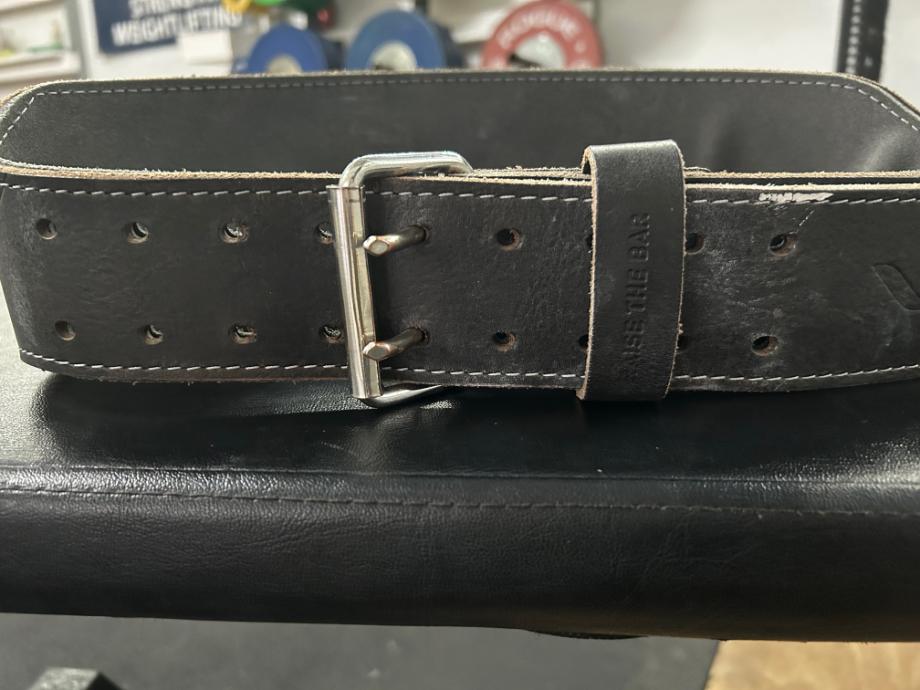
This Eleiko belt has standard 1-inch belt adjustments with a double-pronged buckle, which won’t allow for the micro-adjustments you’d get from Velcro straps. “I never felt like I couldn’t get my ideal tension,” adds Jacob, “But you can’t get the precise adjustments you can in other belts.” That said, he still rates the adjustability a 4 out of 5.
As for aesthetics, it only earns 2 out of 5 in this category because, like most leather weightlifting belts, it only currently comes in two colors: brown or black. “But it’s a sexy, clean look,” Coop says “I love how the etched Eleiko logo covers most of the backside of the belt, and the stitching pops against the leather.”
If you prefer more precise adjustments and less rigidity, check out the Warm Body Cold Mind 4-Inch Nylon Weightlifting Belt, which is also compliant with IWF standards, but instead uses a Velcro closure system.
Testing Breakdown
The Eleiko Olympic weightlifting belt earned 4s and 5s across the board, with the exception of color options and design, since there are only two.
Vs. The Average
For only about $15 more than the typical price, you’re getting outstanding quality and leather craftsmanship; a.k.a., a belt that can last you a lifetime with proper care.
| Eleiko Premium Weightlifting Belt | Average Weightlifting Belt | |
| Price | $150 | $134 |
| Width | 4” | 4” |
| Thickness | 8 mm | 10 mm |
| Number of Sizes | 5 | 6 |
Read our Eleiko weightlifting belt review for more details on this belt.
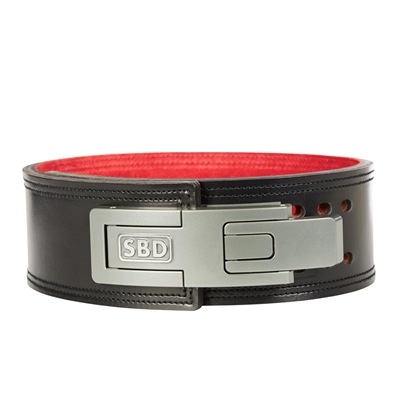
Best Powerlifting Belt: SBD Belt
Updated by: Amanda Capritto, CPT, CES, CF-L1, CSNC
At a Glance
- Maximum specs allowed by IPF
- Red suede interior
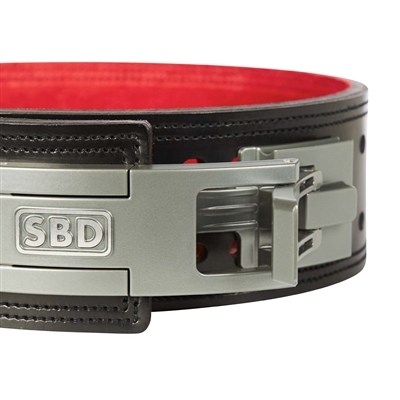
- Patented gliding lever increases adjustability
- Sizes up to 5XL
The SBD Lever Belt is a little controversial in the weightlifting belt world, mostly due to its high price point. At around $310 (before shipping and handling), it’s one of the most expensive options out there—but we think it’s worth every penny, rating the value at 4 out of 5.
As GGR founder Cooper Mitchell puts it, “This won’t fit every powerlifter’s budget, but it’s one of the most stable weightlifting belts we’ve tried.” Additionally, it complies with numerous powerlifting organizations’ standards for belts, is easy to use, and it’ll last you many years if you treat it well.
RELATED: How to Build a Powerlifting Home Gym
Durability: 4.75/5

Adjustability: 4/5

Value: 4/5

Why We Like the SBD Belt
We’ll start with the closure system, which, in our opinion, is what separates the SBD Lever Belt from the competition. The patented gliding lever combines a buckle system’s ease and security with a prong buckle’s ease of use. “This results in one of the most secure-feeling closure systems we’ve felt on a weightlifting belt,” Coop says. “This was worn by people of multiple sizes, too, and each one was able to adjust it to their liking in no time.”
Some powerlifters keep their weightlifting belts on their body when they’re not lifting because they’re so hard to put on and take off. The SBD Lever Belt eliminates that issue due to its ease of use. As such, it gets a 4.75 out of 5 for its adjustability and lever system.
The leather, which is treated for five months for optimal hardness, is stiff and might take a while to break in. You can be certain, however, that it will keep you supported no matter what; Coop rates the overall durability and construction a 4.75 out of 5.
When first putting the belt on, I’m not going to lie, it isn’t comfortable. This should be expected with any 13-millimeter belt, though, so it wasn’t a surprise.
Coop Mitchell, GGR founder
Alternatives
You should be aware that SBD advises against wearing light-colored clothes during the first few months of wearing this belt. The interior red suede can rub off if you’re too sweaty, which could lead to stains. The red suede is there to prevent any slippage that might occur.
As mentioned, it’s objectively expensive as well. “If you’re into powerlifting, though, it’s a top-of-the-line product that’s guaranteed to assist you in your lifting journey for many years,” says Coop.
For a less expensive lever belt, check out the Bells of Steel Lever Belt. It’s over $100 cheaper, but you’ll have to adjust the lever buckle to your ideal width, which can take some time and tools.
Testing Breakdown
Despite its high price, the SBD Belt still scored highly in value because of its premium construction and long-lasting durability.
Vs. The Average
The SBD belt costs nearly double what the average lifting belt costs. For the right buyer, it’s worth it, though.
| SBD Belt | Average Weightlifting Belt | |
| Price | $310 | $134 |
| Width | 4” | 4” |
| Thickness | 13 mm | 10 mm |
| Number of Sizes | 9 | 6 |
Read more in our full SBD Powerlifting Belt review.
Best Weightlifting Belt for Beginners: Warm Body Cold Mind 4” Nylon Weightlifting Belt
Updated by: Amanda Capritto, CPT, CES, CF-L1, CSNC

At a Glance
- Works for Olympic lifting or powerlifting
- Certified to IWF specifications
- Short (14-day) return policy
- One of the more comfortable belts we’ve tried
If you’re new to strength training and want to try out a belt for the first time, GGR founder Coop Mitchell recommends the Warm Body Cold Mind 4-Inch Nylon Weightlifting Belt. “At only $35, it’s a bargain value,” he tells me, nodding to his 4-out-of-5 value rating. “Plus, it’s quickly adjustable and provides a good balance between support and flexibility, so beginners can figure out what sort of belt they prefer.”
Design: 4/5

Comfort: 4/5

Versatility: 4.5/5

Why We Like the Warm Body Cold Mind 4” Nylon Weightlifting Belt
Designed by weightlifting Olympian Oleksiy Torokhtiy, this weightlifting belt is made within IWF specifications with a width of 4 inches across the entire belt. So, this belt can be used in competition for the snatch exercise and clean and jerk.
Weightlifting coach and certified personal trainer Hughston Armstrong, USAW-L2, PN1-NC, ACSM-CPT, CWC, PPSC, tried out the Warm Body Cold Mind Nylon Belt over a couple of weeks, training in CrossFit, Olympic weightlifting, and powerlifting movements, and felt the belt performed pretty well through it all.
“I would’ve liked a little more rigidity during clean and jerks,” Hughston explains, “But people that prefer a flexible belt will really like this.” Accordingly, he rates the versatility at 4 out of 5.
The belt is available in five sizes and four different colors, so anyone new to strength and resistance training will have options to choose from, earning a 4 out of 5 for design and colorways and a 3 out of 5 for sizing. In our experience, the belt runs true to the sizing on the brand’s website.
The cost of weightlifting gear can add up quickly. I’m glad to see a versatile and durable, not to mention beginner-friendly, belt at this price point.
Amanda Capritto, CPT, CES, CF-L1, CSNC
Alternatives
One issue Hughston had with the belt was that the adjustment strap was a little short. “Other nylon belts I’ve used have a longer strap to get a hold of to cinch the belt tightly. This belt’s strap is a little short, so it makes it difficult at times to tighten all the way.” While it allows for smaller adjustments, the short straps knock down the belt’s adjustment score to 3.75 out of 5.
Worth knowing, too, is that this brand only offers a 14-day return policy as opposed to the standard 30-day policy (and sometimes longer timeframes with higher-end belts). There’s also only an email address for contacting the support team, leading our tester to rate the company a 2 out of 5 for customer service.
For a longer adjustment strap, consider the 2POOD Straight Belt, although its price is nearly double that of the Warm Body Cold Mind belt.
Testing Breakdown
The Warm Body Cold Mind nylon belt earned high marks from our testers for construction, versatility, comfort, and value.
Vs. The Average
This belt costs nearly $100 under the average price for weightlifting belts, making it a superb value for beginners.
| Warm Body Cold Mind 4” Nylon Weightlifting Belt | Average Weightlifting Belt | |
| Price | $35 | $134 |
| Width | 4” | 4” |
| Thickness | Not disclosed | 10 mm |
| Number of Sizes | 5 | 6 |
Other Weightlifting Belts We Researched
The team at Garage Gym Reviews and I have tested quite a few belts over the years from virtually every brand you can think of. That said, not every belt can make our list of the top picks. Here are some other weightlifting belts that we’ve liked, along with why they may have fallen just short of our best picks.
- Rogue Ohio Lifting Belt: This belt is basically the same as the REP Premium Lifting Belt, but the leather of the Ohio Belt is much more pliable and stretches over time. The edges are single-stitched, as well, making them more prone to breaking. If you want a Rogue Fitness belt, we recommend paying the extra money for the Pioneer Cut.
- Dominion Power Belt: We think this is a phenomenal powerlifting belt, as well. It’s the same as the Dominion 3” Lifting Belt, is a great deadlift belt, but with another inch in width.
- Titan Support Brahma Power Belt: The Titan Brahma Belts are high-quality, USA-made, genuine leather weightlifting belts that use strong materials and offer customization options. The biggest issue with the belts that we’ve heard from others is that they don’t meet federation specs, although the brand’s site says they’re IPF-approved.
How We Picked and Tested the Best Weightlifting Belts
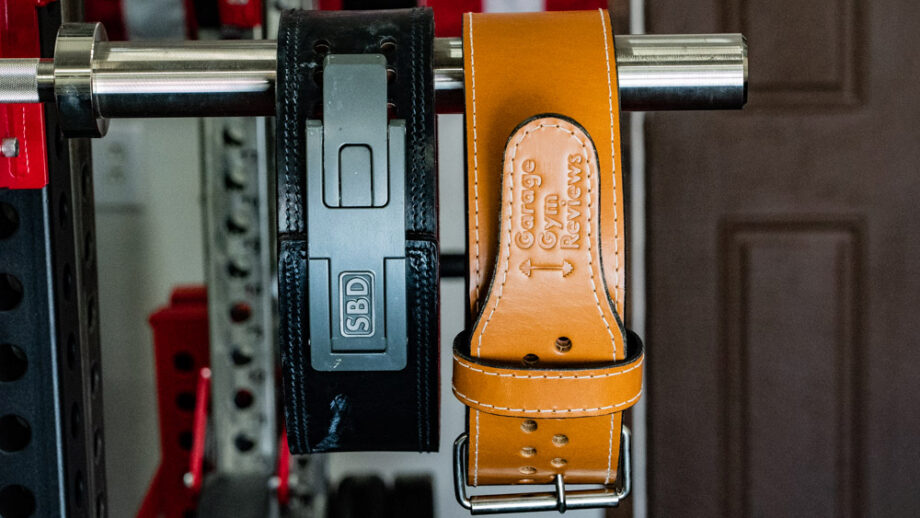
We used all of the above weightlifting belts for any and all lifts a belt might be used for, including heavy deadlifts and squats, clean and jerks, and snatches. We also wore them during higher-volume workouts and sessions with a variety of movements to see how they fared for general comfort and versatility.
Some key factors we evaluated during testing include:
- Durability and Construction: We took a look at the materials used in each belt and how they held up during workouts. We noted any signs of early wear and let those factors impact the score here, as well. We also measured each belt for thickness and width accuracy to see how closely the actual product lined up with the stated dimensions online. A score of 3 out of 5 reflects early but minor durability concerns, such as Velcro beginning to lose grip on a nylon belt or visible cracking in the leather.
- Adjustability: How easy was it to tighten or loosen the belt? Would the belt allow for small refinements, or were adjustments fixed at every inch or so? For adjustability, a 3-point rating suggests limited sizing options, or a closure system that isn’t especially quick or intuitive to dial in during workouts.
- Versatility: Depending on the width and rigidity of the belt, it may be designed for specific exercises or lifts. More flexible belts can allow for use in CrossFit workouts, so we rated this score on how much (or how little) you could do with the belt. A score of 3 may also indicate a compromise in performance, where the belt feels too stiff for metabolic conditioning workouts or doesn’t provide enough support for heavier lifts.
- Comfort: This was a rating of how the belt fit, overall. In other words, was it comfortable? If there was a break-in period, we noted this, as well. Comfort scored at a 3 out of 5 may be average at best, with a noticeable break-in period or minor discomfort during use.
- Value: Belts can vary greatly in price from under $40 to nearly $300. This was a score on how justified the price is. Does the belt feature a lot of versatility for its value? Is it priced fairly or even competitively? A 3-point rating represents a balance between cost and quality.
Benefits of Weightlifting Belts
Wearing a weightlifting belt is not a requirement for weight training. In fact, I’d go so far as to say you don’t need to wear a weightlifting belt at all if you’re not training at near-maximal (above 80% of your max for a specific rep range). It’s actually really important to master beltless training and learn how to engage your core without the support of a weightlifting belt.
That said, belts do have their place. When lifting heavy weights, wearing a weightlifting belt can provide extra support for your entire midsection, which includes your abdominal muscles and back muscles. It’s also worth noting that some competitive athletes wear belts even during light lifts to ensure their technique remains the same all the time. People with prior injuries can also benefit from wearing belts, even at light loads.
RELATED: Best Back Exercises
Here, I’ll explain some of the key benefits of adding a weightlifting belt to your training routine.
A Reminder for Your Core
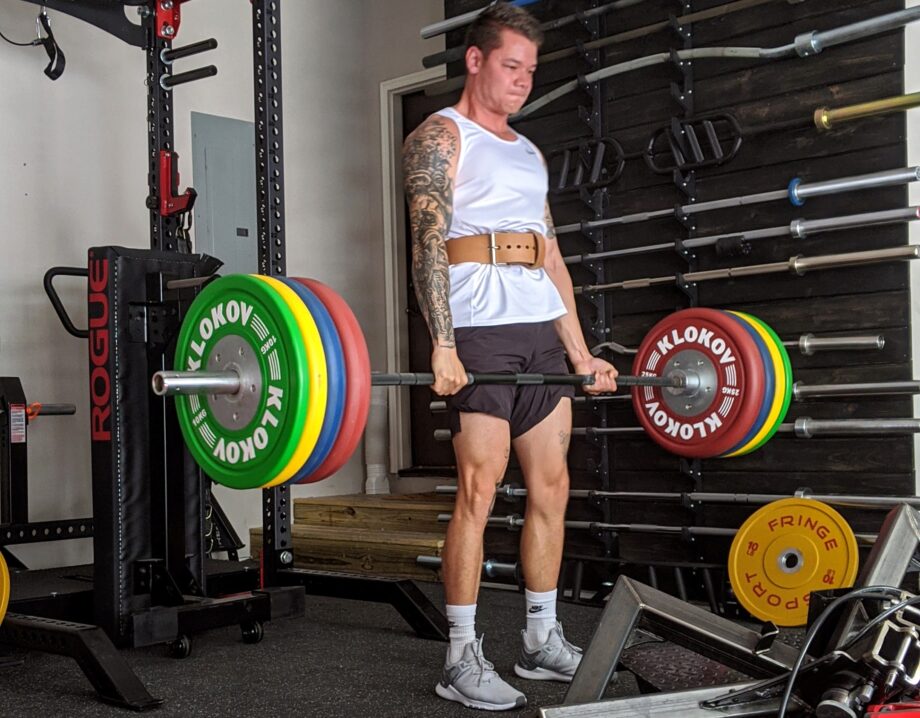
By increasing intra-abdominal pressure2, a weightlifting belt serves as a reminder to brace your core, and it also gives you an object to brace your core against. However, a weightlifting belt is not a replacement for core engagement. Instead of thinking of a belt as a necessity for core bracing, think of it as a physical cue to tighten your core. A belt should always be an indirect, not direct, support during your lifts.
Caine Wilkes, Tokyo Olympian and GGR Senior Staff Writer, has lifted more than 500 pounds over his head in the clean and jerk. However, even he likes to emphasize that belts act more as a reminder than the key to lifting heavy weights. “I use a lifting belt on my heavy working sets just to emphasize proper form,” he explains. “It helps me remember to brace throughout a pretty dynamic lift like the clean and jerk. Otherwise, you may forget and lose your brace and core strength.”
Better Technique and Stability
Many beginners in CrossFit, powerlifting and Olympic lifting assume that wearing a weightlifting belt automatically allows them to lift more weight. This is not so. Weightlifting belts can help you maintain better technique and stability during lifts at very high loads, thus increasing the chance that the lift is successful. I get that it looks like “belt equals more weight,” but again, it’s smartest to view weightlifting belts as a support tool rather than a crutch.
Injury Prevention
People also assume that using a belt protects your lower back, and although this is somewhat true, it’s not entirely correct. What a belt actually does is create pressure to brace your core against. When you brace your core, you’re less likely to suffer a back injury. By default, then, weightlifting belts assist in the protection of the spine (but the real protection is core engagement).
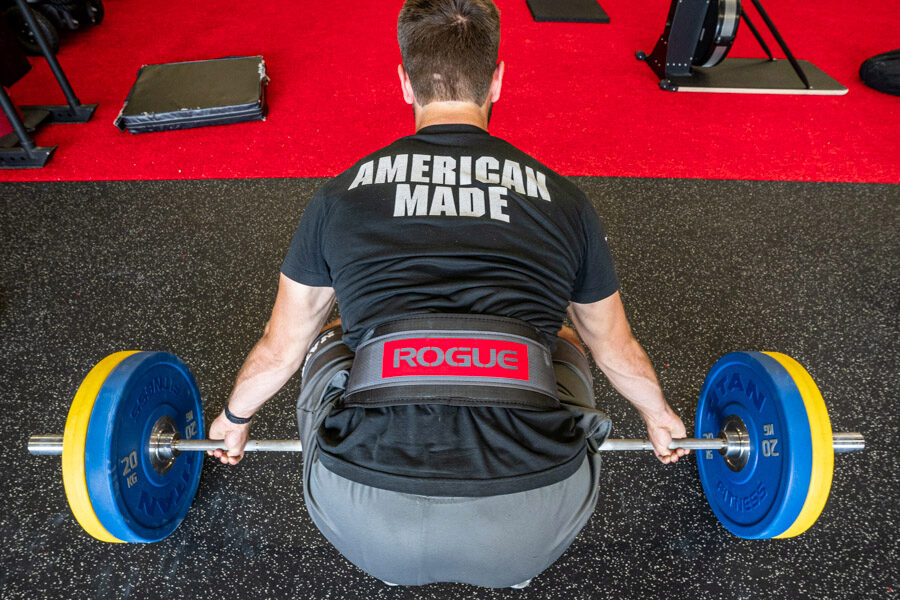
Do I Need a Weightlifting Belt?
This is one of the most controversial questions in strength training, and the answer is that nobody really needs one. Yes, wearing a belt does take some stress off the midsection and can potentially reduce the risk of injury during heavy lifts, but there are many athletes who find it unnecessary.
If you’re someone who plans on competing at a high level in weightlifting, powerlifting, or CrossFit, then we recommend you invest in a weightlifting belt. You’ll be lifting a lot of weights during your prep, and taking care of your body can help ensure you feel ready to go come the big day.
If you’re someone who lifts as a hobby, the decision is going to come down to preference. Belts don’t make you stronger or allow you to lift more weights, but they can be a great aid if progressive strength is one of your goals.
That said, you should work on perfecting your lifting form before you get a weightlifting belt. A belt won’t do you many favors if your technique needs adjustment. This means a belt should also be avoided by beginners, who should dedicate time to learning proper form before trying to lift anything heavy, anyway.
RELATED: Proper Squat Form: Tips From An Olympian
Finally, if you’re someone who sticks to machine workouts, there’s a 99% chance you’ll be OK without a belt. Ask yourself these few important questions before taking the plunge and purchasing a weightlifting belt.
Do you know how to engage your core?
Full stop. Mike Masi, doctor of physical therapy and Garage Gym Reviews expert panelist, says if you’ve never learned to brace your core without a belt, you should definitely do that before buying and using a belt.
Otherwise, he says, “Your belt might become more of a crutch than a support tool over time. It’s important to know how to engage your core to use a belt properly and get the most out of it, anyway.”
Do you lift weights regularly?
If your weekly workouts consist of more jump squats than barbell squats, you probably don’t need a weightlifting belt. Workout styles such as high-intensity interval training (HIIT), circuit training, and other high-volume, cardio-heavy training don’t typically require a belt, either. This is not to say CrossFitters shouldn’t buy a belt, because CrossFit encompasses cardio-heavy training in addition to lifting weights.
Do you regularly train at near-maximal loads?
If you do lift weights on a regular basis, how often are you lifting heavy and how heavy are you going? Heavy is relative, but if you never lift more than 80% of your max at a given rep range, you may not even need a belt. For instance, marathon runners who are using lifting as a way to cross-train probably wouldn’t benefit from a weightlifting belt, seeing as they’re unlikely to be reaching loads greater than 80% for a given rep range.
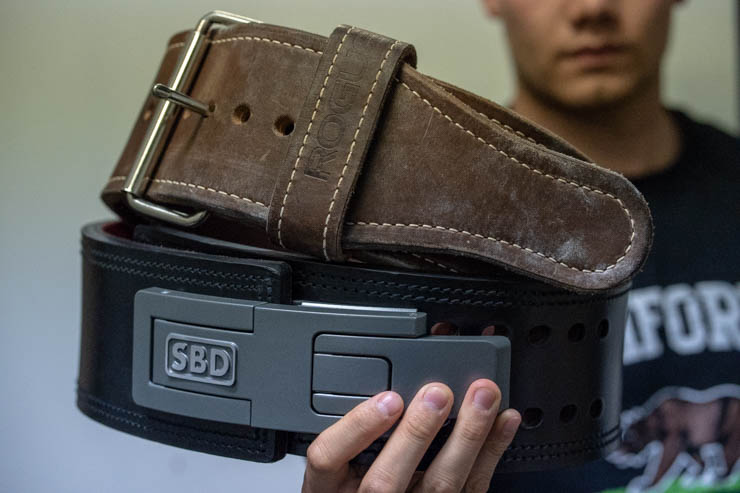
Buying Guide: What to Look for in Weightlifting Belts
Several factors go into the decision to buy a specific weightlifting belt. These are some of the most important things I encourage people to think about before finalizing their purchase.
Your Sport
Your primary training style will largely dictate the best weightlifting belt for you. If your workouts mainly consist of Olympic lifting, you’ll need a different belt than someone whose workouts primarily entail CrossFit or powerlifting.
In general, less rigidity can be better for functional fitness-style training, while more rigidity is better for heavy lifting. Also, consider the closing mechanism: If you’re moving quickly from heavy deadlifts to pull-ups and back to deadlifts, you’ll want to minimize the time spent buckling and unbuckling your belt.
Budget
Weightlifting belts span a rather large price range. You can find decent-quality belts for under $50, while some premium belts from brands like Eleiko and SBD can run you more than $200. Before deciding on a number, consider how much you’ll use the belt and your goals for it. If you don’t plan on training to become an elite weightlifter or powerlifter, lifting near-maximal loads multiple days a week, you likely don’t need to drop hundreds on a belt.
Materials
Most weightlifting belts are made from either leather (including suede) or nylon. You may come across different blends of materials, including neoprene, cloth coverings, and foam inserts, but the base pretty much always comes down to leather or nylon. Leather is often considered the gold standard for weightlifting belts, but it isn’t the best material to use in every situation. Nylon can work well for higher-volume lifting and in functional fitness settings.
If you do choose to buy a leather weightlifting belt, look out for fillers and stiffening agents that might affect the performance of the leather over time. Be sure to also read customer reviews about the break-in period and how the belt molds to the body, as this is essential to enjoying a leather weightlifting belt over extended use.
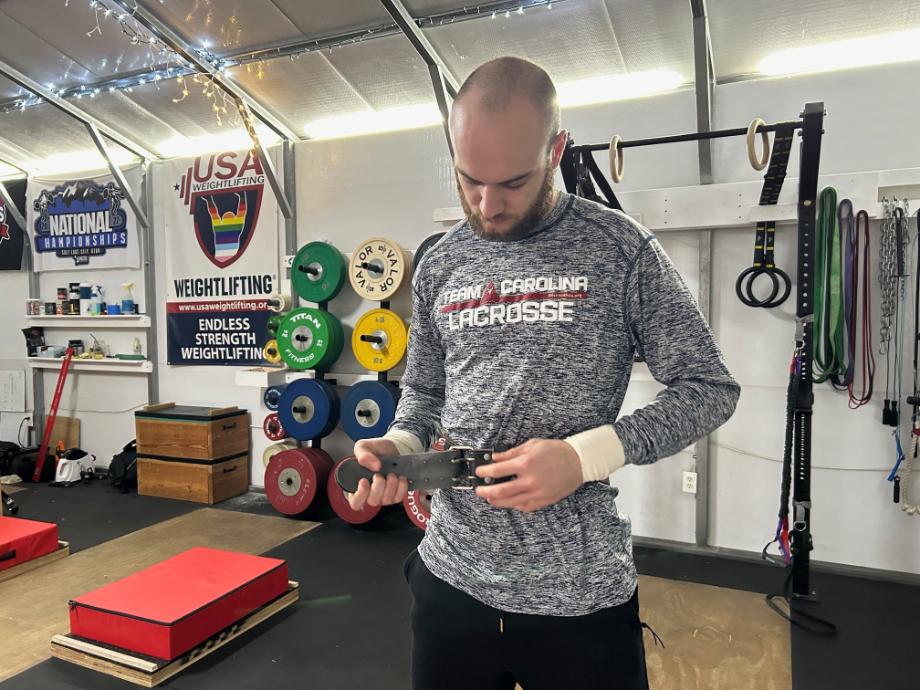
Belt Thickness and Width
One of the main questions I get about weightlifting belts is how thick they should be. I say, leave this up to personal preference. Leather belts will naturally be thicker than nylon belts, thus providing more rigidity.
However, we’re less concerned with the actual thickness of the belt (unless you’re a competitor) and more concerned with how the stated thickness lines up with the actual thickness. I’ve seen many belts listed with a specific thickness that doesn’t line up with the product in-hand.
Also, note that belt thickness isn’t the same as belt width. Thickness refers to how many millimeters deep the material is, while width refers to how many inches wide the belt is at its widest point. Weightlifting belts mostly fall into the range of 3 to 13 millimeters thick and 3 to 6 inches wide.
When looking at width, the biggest factor is the length and size of your torso. People with longer torsos can generally benefit from a wider belt, while shorter or more petite people may find wider belts uncomfortable and even unusable.
If you are a competitor, you should pick a belt that complies with the official rules of your sport. The IWF standard, for example, is that no belt can exceed 12 centimeters wide. However, the IPF states that 10 centimeters is the maximum width for belts, and 13 millimeters is the max thickness.
RELATED: An Olympian Explains How to Increase Strength
Stitching and Gluing
The layers of the belt should, in most cases, be stitched when using leather. The more stitching, the better (up to a certain point). You want it to be held together well but not overly bulky. Most manufacturers typically use glue to prevent bubbling between the layers, as well. The stitching itself should overlap to prevent the seams from coming undone over time.
Hardware Finish
To prevent corrosion on your belt, look for a stainless steel buckle or some sort of finished hardware, such as zinc or chrome. This is especially important for home gym owners who may not be training in climate-controlled environments.
Customization Options
Can the belts be customized? If so, to what level and at what cost? What colors are available? While aesthetics might not be the main driver behind your purchase, we’re firm believers that you won’t wear or use something you don’t like the look of.
RELATED: 7 Types of Strength Training Pros Want You To Know
Flap Security
The piece of the belt that wraps around and has a prong inserted should be secured using rivets. This is the most secure system we’ve experienced, and it can help defend against premature breakdown.
Edge Work
Are the edges of the leather skived and dressed, or are they just left with a sharp edge and no dressing to prevent separation? If it’s a nylon belt, how durable is the edge stitching? Fraying is a big no-no when it comes to weightlifting belts, as it can reduce the longevity of the belt.
Break-In Period
If you’re interested in a leather belt, make sure to seek reviews that mention the break-in process. Some super tough leather belts may never fully break in or become more supple, which is a deal-breaker for many. Ideally, a leather belt should mold to your body over time for an ultra-comfortable and supportive fit. You can speed up the break-in process by rolling the belt up into a circle one way, massaging it, and then rolling it the other way—rinse and repeat.
Value
Does the cost of the belt line up with its features and quality? I don’t mind recommending a more expensive belt if the quality matches the price point. However, with so many decently priced, high-quality belts out there these days, it becomes difficult to recommend the more expensive options.
RELATED: Best Budget Home Gym Equipment
Warranty
What’s the length of the warranty on the belt? What does it cover? Are there so many stipulations that it’s not even worth filing a warranty claim? If you’re buying a $50 belt, this stuff may not be a huge deal, but if you’re buying a $200 belt, it sure is. A lifetime warranty is rare on belts, but we like to see at least three years of coverage, especially on more expensive belts.
Belt Size
Yes, weightlifting belts come in different sizes, and it’s important to measure your torso to find the right one. Some brands offer sizes ranging from XXS to XXL, while others are more limited. In any case, use the brand’s size chart to ensure you get the right fit. Otherwise, the belt won’t offer proper core support or back support.
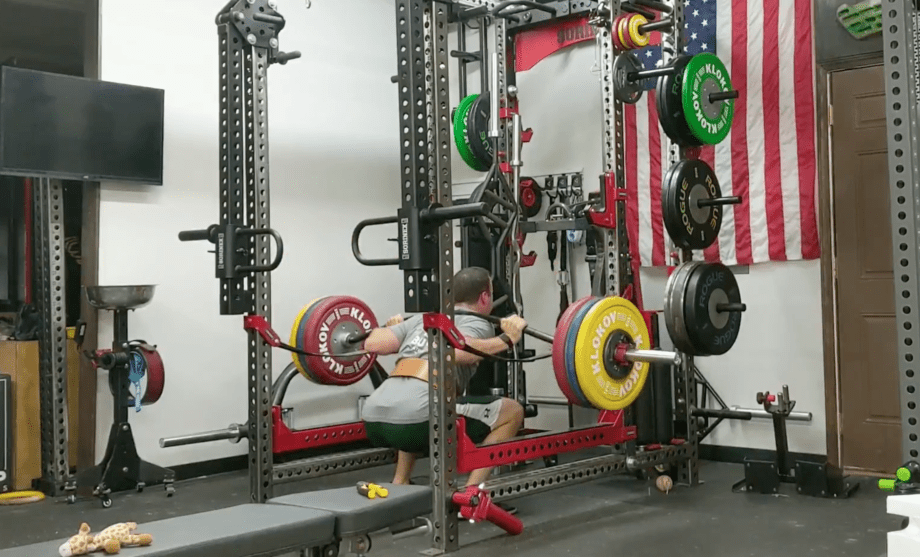
Fastening System
The fastening system, or how you secure the weightlifting belt to your body, is an important factor to keep in mind when deciding on the best weightlifting belt for you. Here are the different types of systems and what to keep in mind for each.
- Buckle: If a buckle and prong system is used, a roller buckle can be ideal for allowing the tongue of the belt to easily slide in and out of the buckle. A seamless roller buckle is best of all. Prong belts have either single-prong or double-prong buckles; the latter offers maximum support for this type of belt.
- Lever System: If the belt uses a lever buckle, look for reviews that mention how easy or difficult it is to secure the lever, as well as how much flexibility there is to allow for fluctuations in body weight. There’s a good chance you’ll need extra tools to adjust the lever, as well.
- Velcro: If Velcro is used, look for reviews that show how heavy-duty it is. If the Velcro starts to fray (wear out) after only a few uses, that’s an indication that the manufacturer may be using lower-quality materials.
RELATED: Best Equipment for Olympic Weightlifting

How to Wear a Weightlifting Belt
Follow these steps to wear your weightlifting belt the right way and get the most out of your training accessory:
- Position the belt around your waist. The bottom edge should sit above your hip bones to avoid creating air pockets, and so the belt makes contact with your abs, obliques, and back muscles simultaneously.
- Take a small breath and tighten the belt. You want to tighten the belt to the point where it feels like a tight fit, but not like you’re going to bust the buckle. Leave some room for your stomach to expand when you inhale during your lift. A good rule of thumb is to tighten the belt until you can fit one finger between the belt and your back.
- Fasten the buckle, lever, or Velcro and inhale fully to feel it out. If you feel any pinching or feel like you can’t breathe, you probably need to readjust.
Frequently Asked Questions About Weightlifting Belts
What does a weightlifting belt do?
Weightlifting belts help increase pressure in and around your abdomen, as well as provide a physical cue to promote core engagement. These two functions can make it easier to maintain a stable core and good lifting technique at very heavy loads, which means your chances of a successful lift increase and your chances of injury (theoretically) decrease.
Do weightlifting belts protect your back?
It’s thought that wearing a weightlifting belt may protect the spine when lifting heavy weights because the belt helps increase core muscle activation and stability around the spine. However, I’m not aware of any studies that look specifically at the injury risk reduction abilities of weightlifting belts (obviously, researchers would be hard-pressed to find an ethics board willing to let them potentially injure spines for science).
Do weightlifting belts help you lift more weight?
Belts aren’t magic. They don’t automatically allow your body to do something it isn’t ready for—you won’t increase your back squat one-rep max by 15 pounds just by throwing on a belt. However, because weightlifting belts can increase core stabilization, and core stability is a key indicator of proper lifting form, it’s safe to assume that most people can enjoy more success at heavy lifting when wearing a belt.
When should you use a weightlifting belt?
There’s no hard-and-fast rule about when to wear a belt and when not to, but many people reserve weightlifting belts for very heavy lifts. However, other athletes like to wear belts for high-volume workouts, as well. It’s honestly a matter of personal preference and A-OK as long as you know how to brace your core on your own.
What’s the best material for a weightlifting belt?
Leather and nylon belts are standard. Between the two, one’s not necessarily better than the other, but they can be better for different uses. Leather belts tend to be more rigid and, therefore, work best for powerlifting, strongman, and Olympic lifting. Nylon belts are often seen in the CrossFit and bodybuilding communities.
Will training with a weightlifting belt make my core weak?
Some people and self-proclaimed strength training purists avoid belts at all costs because they think belts are either a cheat, or that belts will make their core weak. Neither are true. If you use a weightlifting belt properly (that is, learn how to brace your core first and then use the belt as a cue and support), you shouldn’t lose any core strength from wearing a weightlifting belt.
References
- Blazek, D., Stastny, P., Maszczyk, A., Krawczyk, M., Matykiewicz, P., & Petr, M. (2019). Systematic review of intra-abdominal and intrathoracic pressures initiated by the Valsalva manoeuvre during high-intensity resistance exercises. Biology of sport, 36(4), 373–386. https://doi.org/10.5114/biolsport.2019.88759
- Lander, J. E., Hundley, J. R., & Simonton, R. L. (1992). The effectiveness of weight-belts during multiple repetitions of the squat exercise. Medicine and science in sports and exercise, 24(5), 603–609.